Guide · Automation
When automation is really worth it: five signs
Not every process should be automated. Five practical signs that tell you whether custom software and automation are worth it for your workflow.
 Richard Roth Strategie & Automatisierung August 22, 2026 4 min read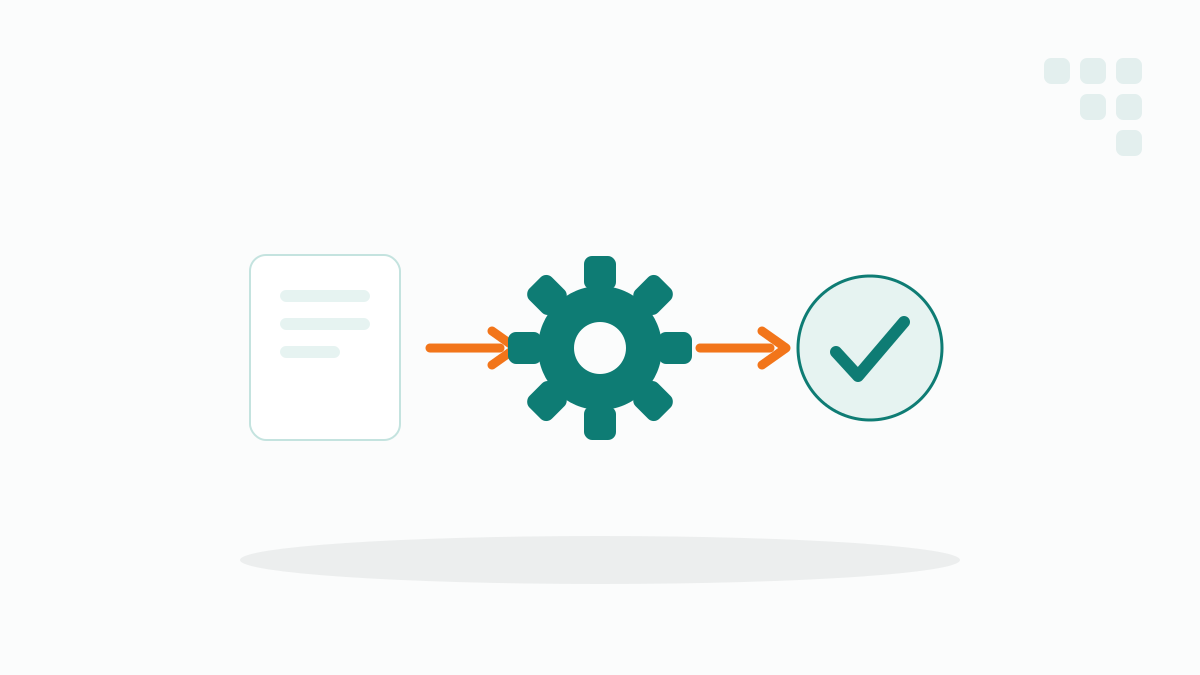
Automation is not an end in itself. Some workflows run perfectly well with a template and a bit of discipline; others cost hours every month without anyone noticing. The skill lies in spotting the right processes. Five concrete signs help you judge whether software is really worth it for a given workflow.
- Repetition beats complexity: the best candidate is a workflow that happens often and in a similar way.
- Media breaks cost the most: wherever data is moved by hand from one system to the next, there is potential.
- Not everything should be automated: for rare or constantly changing workflows, the effort often isn’t worth it.
- Start small: a concrete bottleneck is a better start than a big digitalisation project.
What automation really means
Automation does not mean starting a huge project and waiting a year for results. In practice it usually means taking over repetitive steps and connecting systems that don’t talk to each other yet. The goal is never the technology, but your team’s day, which becomes noticeably easier.
That is exactly why it pays to look honestly before any solution: which workflow really costs time, and why?
Five signs that automation is worth it
These five patterns show up again and again in practice. The more of them apply to a workflow, the more likely a solution pays off.
- It repeats. The same workflow happens daily or weekly and runs almost the same way every time.
- There are media breaks. Data is typed out of an email, copied into a spreadsheet and transferred to the next system.
- Errors are expensive. A transposed number or a forgotten step leads to rework, complaints or lost revenue.
- Knowledge sits with people. Only one specific person knows how a process works, and when they’re on holiday everything stops.
- Effort grows with volume. More orders automatically mean more manual work, instead of the system scaling with you.
In practice, many underestimate the first point: repetition. We almost always start with the one workflow that repeats every day, not the technically most exciting one. That delivers noticeable relief fastest and builds trust for the next steps.
When you’re better off leaving it
The counter-check matters just as much. Not every workflow should be automated, and an honest partner will tell you so.
| Automate when … | Better to leave it when … |
|---|---|
| the workflow repeats often | it happens rarely and irregularly |
| data moves between systems | every case is completely different |
| errors become expensive | human judgement is at the core |
| the knowledge sits with one person | the rules change constantly |
Automation rarely makes sense where a process is rare, changes constantly or depends heavily on human judgement. Here the effort for a clean solution often outweighs the benefit, and a good template or a clear agreement achieves more.
Rule of thumb: if you can’t write a workflow down in clear steps, it usually isn’t ready for automation yet. Clarify the process first, then the software.
The pragmatic first step
The best entry point is not a big project but a concrete bottleneck. Take the one workflow that frustrates your team the most and solve exactly that, as a first usable version that grows with everyday work.
That way you see early whether the solution holds, without developing behind the scenes for months. From there you can expand step by step, towards wherever the next noticeable lever is.
Frequently asked questions
Is automation worth it for small businesses too?
Do I always need AI for this?
How quickly do I see results?
More articles
Custom software
Replace Excel: when a custom app beats the spreadsheet
Excel eventually hits its limits. How to tell when a custom app instead of Excel pays off, and when the spreadsheet is perfectly enough.
Custom software
Having custom software built: process, timeline and pitfalls
How does a custom software project actually run? The phases, a realistic timeline and the most common pitfalls when you have custom software built.
Custom software
What does custom software cost? Prices, models and cost factors
What custom software costs comes down to a few factors. A clear overview of pricing models, cost drivers and why starting small keeps the investment predictable.